
 ₹https://partners.havells.com/near-me/siwan/duraundha/havells-utsav-store-ashish-cement-store-in-duraundha-siwan--Q4psCr/articles/choosing-at-a-ceiling-lights-shop-in-duraundha-siw--92226710-325a-485c-b35e-dc98d3ab6dd3
Havells Utsav Store - Ashish Cement Store, Duraundha, siwan
Home Appliances and Electrical Equipments Store in Duraundha, Siwan, Bihar
Maharajganj Road, Nearby Sub Post Office, Duraundha, siwan, bihar - 841233
Request A Call Back
Havells Utsav Store - Ashish Cement Store Social Feeds in Duraundha, siwan
Choosing at a Ceiling Lights Shop in Duraundha siwan: Type, Spacing and Ceiling
Ceiling lights do most of the work in a home and get the least thought. People pick a design they like, buy one per room, and then wonder why the corners are dark and the middle of the room is too bright.
Two questions settle almost every ceiling light decision, and neither is about design. What kind of ceiling do you have, because that decides which fixtures are even possible. And how many do you need and where, because one light in the centre of a room is rarely the right answer. If you are heading to a ceiling lights shop in Duraundha siwan, work through both before choosing a look.
Your ceiling decides your options
A plain concrete slab, no false ceiling
Nothing can be recessed into it without major work, so your options are surface mounted.
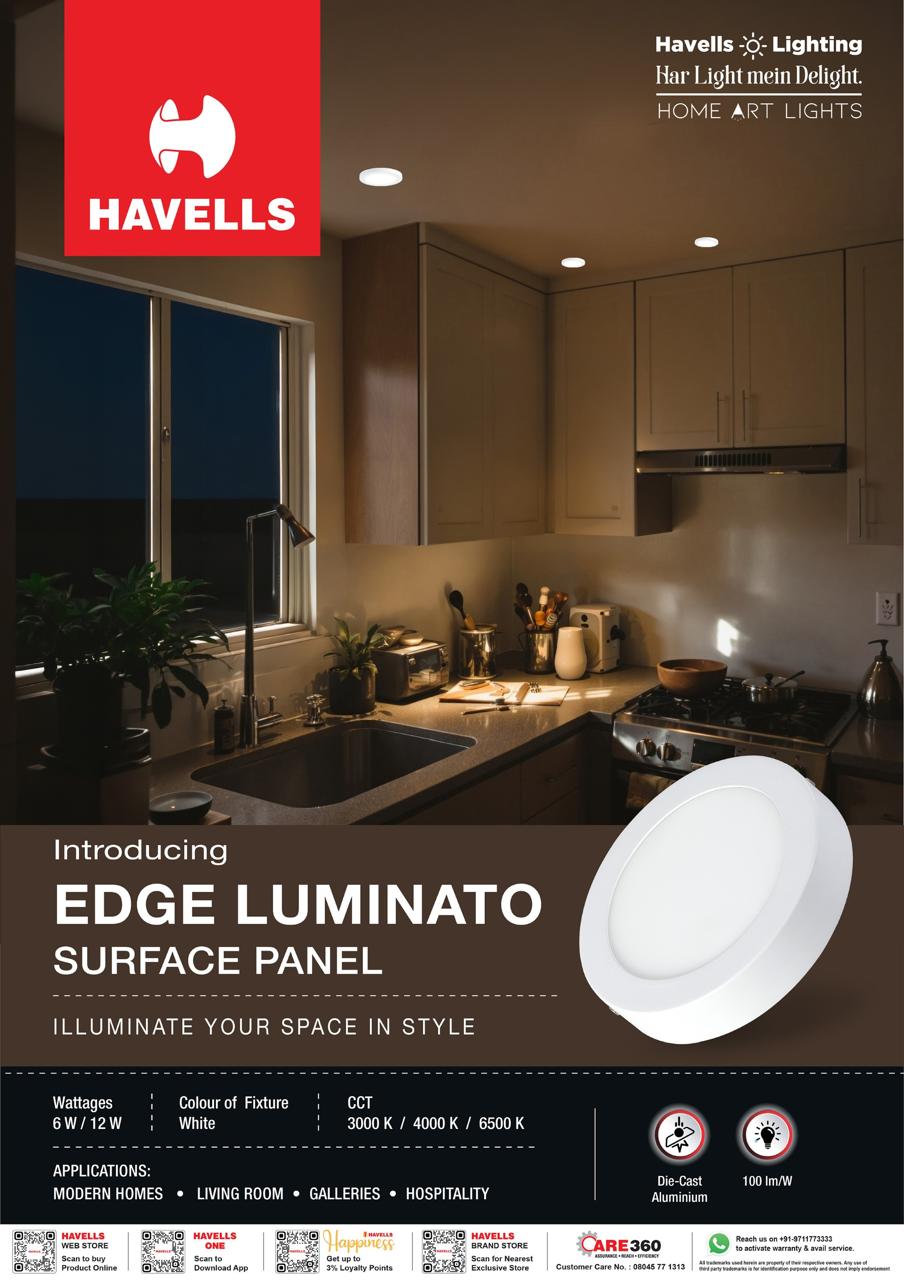
What works: surface mounted ceiling lights, LED battens, semi flush fixtures, and hanging pendants from an existing point. Surface mounted panel lights also exist for exactly this situation, which many people do not realise.
What does not: recessed downlighters and cove lighting, unless you build a false ceiling or a partial cove.
A false ceiling, already boarded
You can use recessed fixtures, but you are limited by what already exists.
The constraint is the cut out size of the existing holes and the depth above the board. If your holes are a certain diameter, buy fixtures that match rather than cutting new ones and patching. Carry the measurement, or better, carry one of the old fixtures to the shop.
Also check the depth available above the board. A deeper fixture will not fit in a shallow gap.
A false ceiling, not yet boarded
This is the best position to be in, and the shortest window. Everything is possible: recessed downlighters, panel lights, cove lighting, profile lighting.
Decide now, because cut out sizes, cove depth, driver space and wiring positions all have to be given to your false ceiling contractor before the boards go up. After boarding, changes mean cutting and repainting.
Wooden or POP ceilings, and rented homes
Weight and fixing method matter more here. Ask the shop for the fixture weight and check with your electrician what the ceiling can take. In a rented home, surface mounted fixtures on the existing point are usually the only sensible route.
The main types of ceiling lights
Surface mounted ceiling lights. Fixed flat against the ceiling. The default for slab ceilings and low ceilings. Wide range of designs from plain to decorative.
Panel lights. Flat, even, wide spread light. Recessed versions for false ceilings, surface mounted versions for slabs. Good general light for bedrooms, living rooms and offices at home.
Downlighters. Recessed, giving a focused pool of light. Used in groups rather than singly. Fixed versions point straight down; adjustable or gimbal versions can be angled towards art or a feature wall.
Battens. Slim linear fixtures giving even light along their length. Best in kitchens, utility areas, store rooms and study spaces.
Semi flush and decorative ceiling lights. A little decorative depth without a long drop. Suit standard height rooms where a pendant would be in the way.
Pendants hung from a ceiling point. Technically ceiling mounted, used where you want a focal point, mainly over dining tables and counters.
How many, and how far apart
This is where most people guess, and where a shop can genuinely help.
Two rules of thumb worth knowing:
Spacing for downlighters. A common starting point is to space them roughly half your ceiling height apart. With a standard ceiling, that lands at a spacing many electricians already use by instinct. Treat it as a starting point, not a rule.
Distance from walls. Keep recessed lights a reasonable distance in from the wall, roughly two to three feet, rather than tight against it. Too close and you get scalloped light on the wall and dark floor space.
One central light is rarely enough in a room larger than a small bedroom, because you are standing between the light and whatever you are doing. That is why kitchens need counter lighting and living rooms need more than one source.
The reliable approach: give the shop your room dimensions and ceiling height and ask for a fixture count per room. A count based on real numbers beats a design chosen first and quantity worked out later.
Fitting light to the room
Living room. General ceiling or panel light, plus a decorative or accent layer. Warm light around 2700K to 3000K.
Bedroom. Softer general light, ideally dimmable, warm. Avoid a bright downlighter directly over the pillow.
Kitchen. Ceiling light for the room plus under cabinet lighting for the counter, since ceiling light alone leaves your work surface in your own shadow. Neutral light near 4000K.
Bathroom. Fixtures suitable for damp conditions, neutral light, and light at the mirror rather than only behind you.
Study or work corner. Neutral light, positioned so it does not reflect off your screen.
Corridor and staircase. Modest, evenly spaced fixtures. Two way switching is genuinely useful on stairs.
Keep colour temperature consistent within each room, and split general, decorative and accent lighting onto separate switches so a room has more than one setting.
What to confirm at the shop
Cut out size, if recessed, and the depth needed above the board
Fixture weight, and the fixing method
Whether it is surface mounted or recessed, since the same design often comes both ways
Lumens for brightness, and Kelvin for warmth
Whether it is dimmable, and with which dimmer
Suitability for damp or outdoor positions, where relevant
Fixture count for your room dimensions
Stock of the full quantity you need, bought together so units match
Frequently Asked Questions
How many ceiling lights does a room need?
It depends on room size, ceiling height and wall colour. As a starting point, space downlighters roughly half the ceiling height apart and keep them two to three feet in from walls. Ask the shop for a count against your actual dimensions.
Can I fit recessed lights without a false ceiling?
Not without building one, or at least a partial cove or box. For a plain slab ceiling, use surface mounted ceiling lights, surface mounted panel lights or battens instead.
What is the difference between a panel light and a downlighter?
A panel light gives wide, even light suited to general illumination. A downlighter gives a focused pool of light and is used in groups, often for accenting or layered ceilings.
How do I know what cut out size to buy?
Measure an existing hole, or take an old fixture to the shop. Matching the existing cut out avoids cutting new openings and repainting.
Is one ceiling light enough for a bedroom?
For a small bedroom, often yes, with bedside lights added for reading. Larger bedrooms usually need a second source, and no ceiling light replaces task lighting where you actually read.
Where can I find a ceiling lights shop in Duraundha siwan?
Choose a shop with lit displays that can give you a fixture count for your rooms. You can locate a Havells Home Art Light store in Duraundha, siwan through the store locator on havells.com.
Bringing it together
Havells covers home lighting across categories including ceiling lights, panel lights, downlighters and battens, and Havells Home Art Light stores are focused on home lighting. For ceiling lights specifically, the useful part of a store visit is confirming cut out sizes, weights and quantities in one conversation, so your electrician and false ceiling contractor get the details before boarding.
Start with your ceiling type, get a fixture count for each room, keep colour temperature consistent, and buy matching units together.
Take your floor plan and ceiling details to the Havells Home Art Light store in Duraundha, siwan and confirm quantities and cut out sizes before your ceiling work closes.