


 ₹https://partners.havells.com/near-me/raighar/patrakoti/havells-utsav-store-bhagabati-hardware-in-patrakoti-raighar--7eKupL/articles/modern-lighting-lines-tracks-and-integrated-leds--c6b2acf9-1224-4954-b48d-8785c43162b5
Havells Utsav Store - Bhagabati Hardware, Patrakoti, raighar
Home Appliances and Electrical Equipments Store in Patrakoti, Raighar, Odisha
No 1, No 64/344, Bhagabati Complex, Nearby Vishwakarma Temple, Patrakoti, raighar, odisha - 764074
Request A Call Back
Havells Utsav Store - Bhagabati Hardware Social Feeds in Patrakoti, raighar
Modern Lighting: Lines, Tracks and Integrated LEDs
Modern lighting is often described as minimal, which is a little misleading. A modern scheme usually has more light sources than a traditional one, not fewer. The difference is that each source is quieter. Instead of one ornate fixture doing all the work, you get clean lines, slim profiles and light that seems to come from the architecture itself.
That approach suits how homes are built now, with open plan living, flat ceilings and fewer walls to hang things on. If you are working on a contemporary home in Patrakoti and looking at a modern lighting store in raighar, here is what actually defines the look and what to check before you buy.
What makes lighting look modern
Four things, consistently:
Simple geometry. Circles, cylinders, discs, thin rods and rectangles. No ornamentation, no scrollwork, no cut glass.
Slim profiles. Thin bodies, shallow ceiling fixtures, narrow apertures. The fixture takes up as little visual space as possible.
Restrained finishes. Matte black, white, brushed metal, occasionally brass as a single accent. Usually one dominant finish across the home.
Light as a line or a plane, not a point. Linear fixtures, continuous strips and evenly lit surfaces instead of a single bright spot in the middle of the ceiling.
Once you see those four principles, choosing becomes easier, because you are matching a language rather than hunting for individual products.
Linear and geometric fixtures
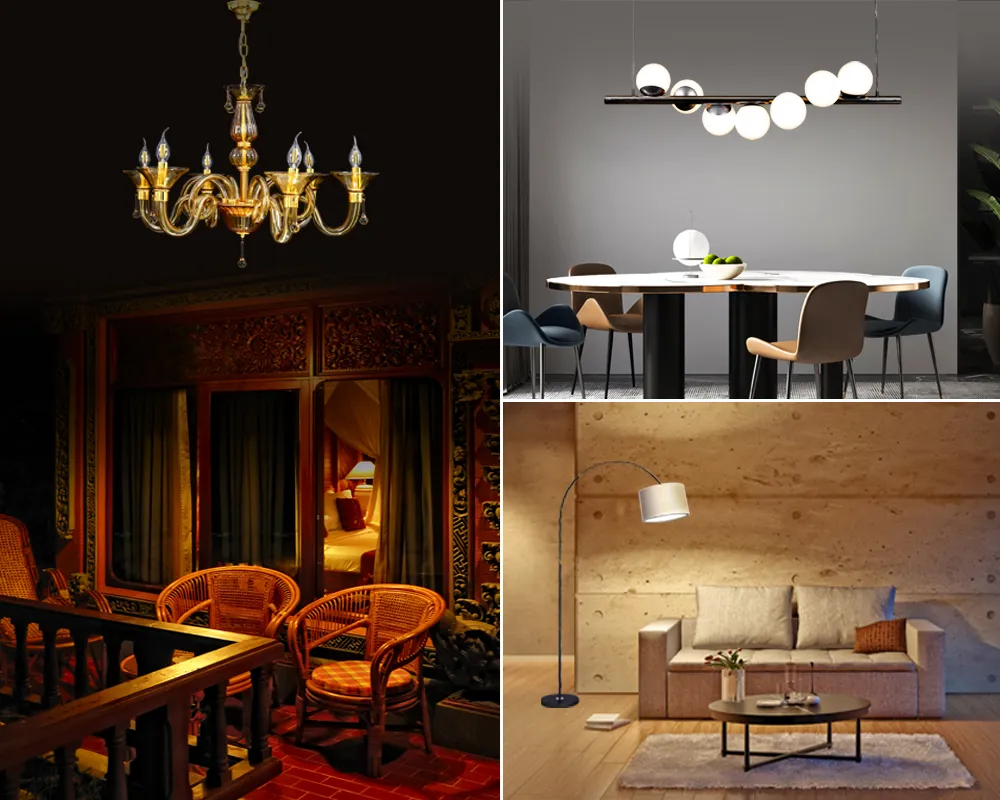
The linear pendant is the workhorse of modern lighting. A long horizontal bar over a rectangular dining table or a kitchen island follows the shape of the surface below it, which is why it looks intentional rather than added on.
Geometric pendants, thin ring fixtures and cylindrical downlights do the same job in round or square rooms. In a cluster arrangement, three simple globes at staggered heights read as modern where three ornate lanterns would not.
Two practical notes. A linear fixture should follow the length of the table, roughly half to two thirds of its width in size, and the bottom generally sits around 75 to 90 cm above the table top. And if the fixture has an exposed light source, keep it out of your direct sightline from where you sit.
Track and magnetic track lighting
This is the most useful modern lighting option that homeowners tend to overlook.
A track is a channel fixed to the ceiling or recessed into it, carrying multiple light heads that can be moved along it. Magnetic track systems let you clip spots, small floods and short linear modules onto the same run and rearrange them later.
Why it suits modern homes:
Flexibility. If you move the sofa or add a painting, you slide the light instead of cutting the ceiling.
One clean line instead of many holes. Visually simpler than eight scattered downlighters.
Mixed functions on one circuit. A spot on artwork, a wider beam over a seating area, and a linear module for general light, all on the same track.
What to confirm: the track length and whether runs can be joined, how many heads the run supports, whether it is surface mounted or recessed into the false ceiling, and whether the same system will still be available if you want to add heads in two years.
Integrated LED or replaceable lamps
Modern fixtures are often slim precisely because the LEDs are built in rather than sitting in a socket. That trade off is worth understanding before you buy.
Integrated LED. Slimmer designs, no visible bulb, generally better optics and less glare. The catch is that when it fails, you replace or service the fixture rather than the bulb.
Replaceable lamp. Bulkier, but you can swap a failed unit yourself and change the colour temperature later if you change your mind.
Neither is automatically better. For statement pieces and recessed fixtures, integrated is usually the right call. For high positions that are difficult to service, or where you want the freedom to change warmth later, replaceable lamps have an advantage. Either way, ask how service and replacement work before you commit.
Lighting an open plan space
Open plan is where modern lighting either works beautifully or falls apart.
Light by zone, not by room. A single ceiling grid across a combined living, dining and kitchen area makes it feel like one flat space. Instead, give each zone its own treatment: a linear fixture over the dining table, focused light over the kitchen counter, and softer general light over the seating area.
Put zones on separate switches. This is what lets one large space feel like three different settings through the day.
Keep colour temperature consistent. Since the zones are visually connected, mixed warmth is far more obvious here than in separate rooms. Warm light around 2700K to 3000K generally works for living and dining, with slightly neutral light acceptable over a kitchen counter if the transition is not in direct view.
Use light to mark the zones. A pendant over the dining table does more to define that area than any furniture arrangement.
Where minimal goes wrong
Three failures worth avoiding.
Too few sources. Minimal design does not mean minimal light. A large room with one slim fixture will have dark corners and hard shadows. Layer it.
Exposed sources in the wrong place. Bare globes and open frames look great in photographs and cause glare when you sit under them all evening. Diffused for seating areas, exposed for accent positions.
Mixed finishes. In a minimal room there is nothing to distract from an inconsistency. One dominant finish, one accent at most, repeated across the home.
Havells covers home lighting across functional, decorative and architectural categories, and Havells Home Art Light stores are focused on home lighting. For a modern scheme this breadth matters, because the look depends on recessed lighting, linear fixtures and decorative pieces sharing the same finish and the same warmth rather than being sourced separately.
Frequently Asked Questions
What is modern lighting?
Lighting defined by simple geometry, slim profiles, restrained finishes and light delivered as lines or planes rather than a single bright point. Recessed, linear and track fixtures are typical.
What is magnetic track lighting?
A ceiling channel that carries light heads held magnetically, so spots, floods and linear modules can be added, removed or repositioned without any ceiling work.
Is integrated LED better than a replaceable bulb?
It depends. Integrated fixtures are slimmer with better glare control, but are serviced or replaced as a whole. Replaceable lamps let you swap units and change colour temperature later.
How do I light an open plan living and dining area?
Treat it as zones. Give each zone its own lighting, put them on separate switches, keep colour temperature consistent across the space, and use a pendant to define the dining area.
Do modern homes still need decorative lights?
Yes. Recessed and linear lighting shape a space but give the eye nothing to settle on. One well chosen decorative fixture per main room provides the focal point.
Where can I see modern lighting in raighar?
Choose a showroom with working displays so you can judge glare and finish. You can find a Havells Home Art Light store in Patrakoti, raighar through the store locator on havells.com.
Final thoughts
Modern lighting is a discipline more than a style. Keep the shapes simple, the finishes consistent and the light sources plentiful but quiet. Use linear fixtures where the furniture is linear, consider a track where you want flexibility, and decide integrated versus replaceable based on how easy the position is to reach.
To compare linear fixtures, track options and recessed lighting side by side, visit the Havells Home Art Light store in Patrakoti, raighar with your ceiling and furniture layout.