

 ₹https://partners.havells.com/near-me/bengaluru/jayanagar/havells-galaxy-skywards-enterprises-llp-in-jayanagar-bengaluru--6OJzPz/articles/planning-ahead-at-an-outdoor-and-garden-lights-sho--c3f0f1f5-0c55-45bd-b77c-dad7c2b3834e
Havells Galaxy - Skywards Enterprises LLP, Jayanagar, bengaluru
Home Appliances and Electrical Equipments Store in Jayanagar, Bengaluru, Karnataka
No 116, 9Th Main Road, Nearby Traffic Police Booth, Jayanagar, bengaluru, karnataka - 560011
Request A Call Back
Havells Galaxy - Skywards Enterprises LLP Social Feeds in Jayanagar, bengaluru
Planning Ahead at an Outdoor and Garden Lights Shop in Jayanagar Bengaluru
Outdoor lighting is the one area where using the wrong product has consequences beyond looks. An indoor fixture on an open balcony will not last a monsoon. A bright light aimed carelessly at a compound wall will shine into your neighbour's bedroom. And an outdoor point without proper protection is a genuine safety issue, not a design flaw.
The good news is that outdoor lighting is easy to plan well, because it breaks into clear zones and each zone has an obvious job. If you are visiting an outdoor and garden lights shop in Jayanagar Bengaluru, plan zone by zone rather than fixture by fixture.
Weather protection comes first
Before anything else, understand this: outdoor fixtures need to be rated for dust and moisture. Indoor fixtures are not, and using one outdoors is not a small compromise. Rain, humidity, dust and temperature swings will end it, and the failure will not be treated as a normal defect.
Ask the shop directly: is this fixture suitable for the exact position I have in mind? Then be specific about the position, because these are not the same:
Fully exposed, such as a garden, driveway, open terrace, compound wall or gate
Partly sheltered, such as a covered porch, a balcony with an overhang, or under a canopy
Near water, such as beside a tank, a water feature or a wash area
A covered porch is more forgiving than an open compound wall. A garden fixture sitting on soil is the most demanding position of all.
Also plan drainage and mounting. A recessed outdoor fixture that collects water is a fixture that fails. Ask how it drains and how it should be mounted.
Zone by zone
Entrance and main door
The most important outdoor light in any home, because it is the one people see first and use daily.
A pair of outdoor wall lights either side of the door, or one beside it, at around head height. Keep it warm and welcoming rather than harsh. Make sure it lights the lock and the step, not just the wall.
Path and walkway
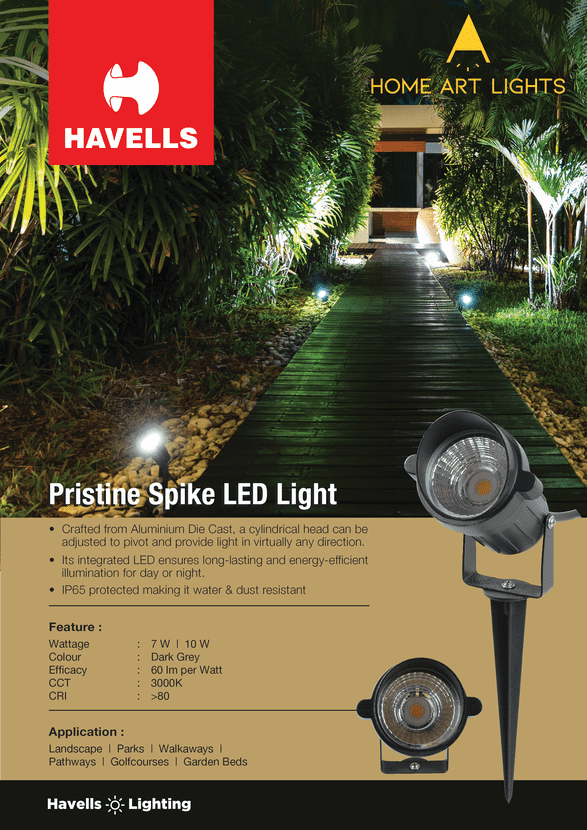
The job is safe footing, not brightness. Bollard lights, short post lights or low level fixtures along the edge work well. Space them evenly, and keep the light pointing down and across the path rather than up into people's eyes.
A common mistake is too few, too bright. Several modest lights beat two glaring ones.
Driveway and gate
Wider coverage, and usually the place for a sensor or timer. Light the turning area and the gate itself. Avoid aiming a bright fixture straight down the road, since it will dazzle anyone approaching.
Garden, plants and trees
This is where outdoor lighting becomes decorative. Spike or spot lights aimed up at a tree trunk or a large plant create depth after dark. A single well aimed uplight does more than a row of small lights.
Aim carefully. Light should catch the plant, not spill into windows.
Compound wall and facade
Light grazing along a wall shows its texture. Fixtures mounted close to the wall and aimed down do this best. Mounted further out, they spread even light and flatten the surface.
Keep the brightness modest here. A brightly lit wall visible from every neighbouring flat is the most common complaint about home outdoor lighting.
Balcony
Usually the most used outdoor space in an apartment, and the easiest to get right. Outdoor wall lights, a small ceiling fixture under the overhang, or outdoor rated string lights along the railing. Keep glare low so light does not bounce back into the living room.
Terrace
Depends on use. For sitting out, low warm light and string lights are enough. For any working or utility use, add a brighter fixture on a separate switch so you are not forced to choose one setting.
Utility, parking and service areas
Function only. A plain outdoor rated fixture with neutral light is all these need.
Glare and your neighbours
Worth its own section, because it causes more friction than anything else in outdoor lighting.
Three habits that avoid it:
Aim light down, not out. Any fixture aimed horizontally travels much further than you expect.
Use shielded fixtures where the light source is set back or hooded, so it does not glare from the side.
Check the effect from outside. After installation, stand on the road and look at your house at night. Then look up at your own upstairs windows. If you can see the bare light source from either, adjust the aim.
Also consider brightness at night. Outdoor lights that are comfortable at 8 pm can be intrusive at 2 am, which is where a timer or a two step arrangement earns its place.
Control: timers, sensors and switches
Outdoor lighting is where automatic control gives the most real benefit, because these are the lights people most often leave on all night.
Timers. Switch on at dusk, off at a set hour. The most useful option for entrance, path and compound lighting.
Motion sensors. Suit driveways, side passages and service areas where you want light only when someone is there.
Separate switch groups. Keep decorative garden lighting separate from the functional entrance and security lighting, so you can run one without the other.
Ask the shop which of your shortlisted fixtures work with a timer or sensor, and confirm the wiring requirement with your electrician.
Safety and wiring outdoors
Outdoor electrical work is not the same as indoor work, and this is not a place to improvise.
Use outdoor rated cable and fittings, properly routed and protected
Keep junction boxes and connections weatherproof and accessible for service
Keep cables away from walkways, digging areas and water
For garden lights sitting on soil, ask about the burial and drainage requirement
Have the work done by a qualified electrician, and ask about earthing and protection for the outdoor circuit
For string lights and any plug in outdoor lighting, use outdoor rated products and keep extension boards sheltered and off the ground.
What to confirm at the shop
Suitability for your exact position, stated clearly
How the fixture drains and how it must be mounted
Fixture weight and fixing method, for wall mounted pieces
Lumens and Kelvin, and whether the beam is narrow or wide
Whether it works with a timer or sensor
Finish durability outdoors, and how it should be cleaned
How replacements and service are handled
Stock of matching quantities bought together
Frequently Asked Questions
Can I use indoor lights on a balcony?
Not on an exposed balcony. Rain, humidity and dust will end an indoor fixture quickly. Use fixtures rated for outdoor conditions, and tell the shop exactly how exposed the position is.
How do I light a garden path?
Use several modest low level fixtures such as bollards or short posts, evenly spaced, with light aimed down and across the path rather than upward. Safe footing matters more than brightness.
How do I stop outdoor lights disturbing my neighbours?
Aim light downward, use shielded fixtures, keep wall and facade brightness modest, and check the effect from the road and from your own upstairs windows after installation. A timer helps for late hours.
Are timers or sensors worth it for outdoor lights?
Yes. Outdoor lights are the ones most often left on all night, so timers on entrance and path lighting and sensors on driveways and side passages save real power.
What lighting is best for a terrace?
Low warm light and outdoor rated string lights for sitting out, plus a brighter fixture on a separate switch if the terrace is also used for work or utility purposes.
Where can I find an outdoor and garden lights shop in Jayanagar Bengaluru?
Choose a shop that will confirm suitability for your specific position rather than describing a fixture as generally outdoor. You can locate a Havells Home Art Light store in Jayanagar, Bengaluru through the store locator on havells.com.
Bringing it together
Havells covers home lighting across categories including outdoor lighting, and Havells Home Art Light stores are focused on home lighting. For outdoor work the two things worth confirming in person are suitability for your exact position and how much glare a fixture produces, since both decide whether the light lasts and whether anyone complains about it.
Plan zone by zone, insist on outdoor rated fixtures, aim light down, put entrance and path lighting on a timer, and have the wiring done properly.
Take your outdoor layout to the Havells Home Art Light store in Jayanagar, Bengaluru and confirm the right fixture for each zone before you buy.