


 ₹https://partners.havells.com/near-me/bareilly/prem-nagar/havells-home-art-light-store-ashok-electricals-home-dcor-in-prem-nagar-bareilly--6erkIj/articles/buying-at-a-wall-lights-shop-in-prem-nagar-bareill--22cd3e9f-2759-48c8-baea-396db1093932
Havells Home Art Light Store - Ashok Electricals Home & Décor, Prem Nagar, bareilly
Home Appliances and Electrical Equipments Store in Prem Nagar, Bareilly, Uttar Pradesh
No 80-81, Machnear Road, Opposite Punjab National Bank, Prem Nagar, bareilly, uttar pradesh - 243005
Request A Call Back
Havells Home Art Light Store - Ashok Electricals Home & Décor Social Feeds in Prem Nagar, bareilly
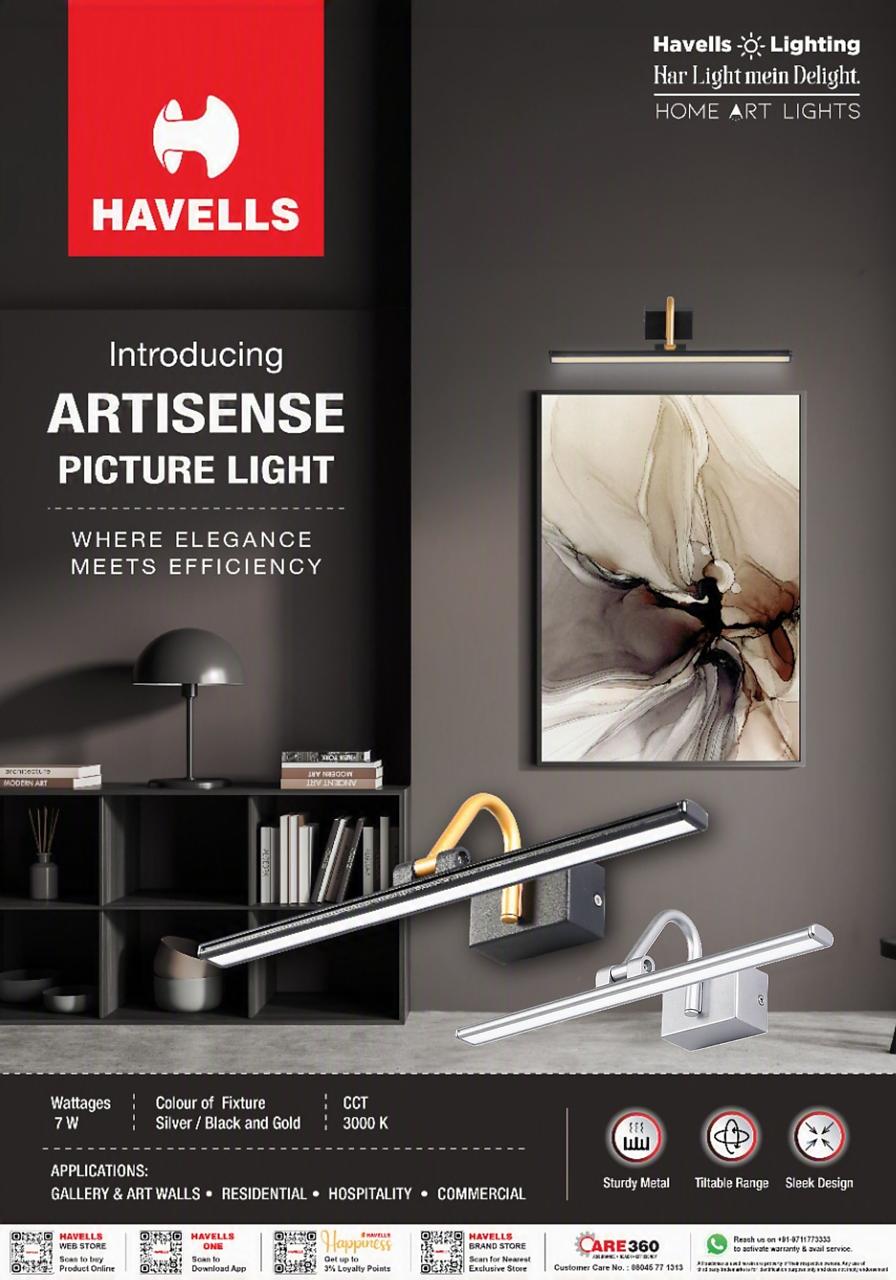
Buying at a Wall Lights Shop in Prem Nagar bareilly: Heights, Spacing and Placement
Wall lights are the most underused fixtures in Indian homes. Most houses have ceiling lights everywhere and wall lights nowhere, which is why rooms often feel flat at night: all the light comes from above, so nothing has depth.
Wall lights fix that, and they solve practical problems too. They free up your bedside table, they light a mirror properly, and they make a corridor usable without a bright ceiling light. The catch is that height and position matter more than design. A beautiful sconce mounted 30 cm too high is a beautiful sconce that shines in your eyes. If you are visiting a wall lights shop in Prem Nagar bareilly, get the heights sorted first.
What direction does it throw light?
Before types, understand this. Wall lights fall into three behaviours, and it changes where each belongs.
Downward. Light falls down the wall. Good for corridors, stairs and beside a bed for reading.
Upward. Light throws up onto the wall and ceiling. Softens a room and makes it feel taller. Good for living rooms and as general ambient light.
Both up and down. The most versatile, and common in decorative designs. Creates two pools of light and a strong vertical effect on the wall.
Diffused all round. A shade or enclosed body spreads light in every direction. Comfortable to sit near, less dramatic.
For any position you look towards regularly, choose diffused or downward. Save exposed sources for accent walls and corridors.
Mounting heights, position by position
These are working rules of thumb, and adjusting them for your own furniture is normal.
Beside a bed
Mount so the bottom of the fixture sits a little above your shoulder when sitting up in bed, usually somewhere around 100 to 120 cm from the floor depending on your bed height. Position it slightly outward from the pillow rather than directly above your head, so light lands on the book, not your face.
Adjustable or swing arm designs are worth the extra cost if you read at night.
Also plan the switch. A bedside wall light with a switch on the fixture itself, or a two way switch at the bed, is what makes it actually useful. Otherwise you are getting up to turn it off.
At a mirror
Light at the sides at roughly eye level is far better than a single light above. A light above and behind you throws your own face into shadow, which is why bathroom grooming under a ceiling light is difficult.
For a pair either side of a mirror, around 160 to 170 cm from the floor works for most people, with a gap wide enough to clear the mirror. Neutral light near 4000K suits grooming.
In a corridor
Mount at roughly 165 to 175 cm from the floor so the fixture is above eye level and not in anyone's way. Space them evenly, and choose a slim profile so nobody catches a shoulder on them in a narrow passage.
On a staircase
Follow the slope of the stairs, keeping each fixture at a consistent height above its own step. Keep them well clear of the handrail path. Step or skirting level lighting is an alternative that avoids the head clearance problem entirely.
On a feature wall
Here the goal is to reveal texture, so position matters more than height. Mounting close to the wall and aiming down skims light across the surface and shows the texture of stone, brick, fluted panels or textured paint. Mounting further out spreads even light and flattens texture.
At an entrance
A pair either side of the door, or one on the wall beside it, at around head height. Use outdoor rated fixtures for any external entrance, since dust, rain and humidity are constant.
Outdoors on a balcony or compound wall
Outdoor rated only. Keep glare controlled so light does not shine into your own rooms or a neighbour's window.
Spacing when you use several
For a run of wall lights along a corridor or living room wall, even spacing matters more than the exact distance. Two guidelines:
Keep the spacing consistent, and start and end the run with equal distance from the corners
Do not crowd them. Fewer, well spaced fixtures look deliberate; a tight row looks like a hotel passage
For a pair flanking a bed, mirror or artwork, keep them symmetrical and at the same height. Asymmetry in a pair is very visible.
The wall itself
Two practical checks before you buy.
Is there a point there? Wall lights need a wired point at the mounting height. If there is none, that means electrical work, chasing the wall, and patching and touch up paint. Check this before you set a deadline. This is the single most common reason wall lights get dropped from a plan.
What is the wall made of? Solid brick or concrete takes most fixtures easily. Drywall or partition walls need appropriate anchors, and heavier fixtures may need backing support. Ask the shop for the fixture weight and pass it to your electrician.
If there is no point and you cannot chase the wall, plug in and rechargeable wall lights exist and need no wiring at all.
What to confirm at the shop
Fixture weight and the fixing method
Which direction it throws light, seen lit rather than described
Dimensions, particularly how far it projects from the wall in a narrow corridor
Lumens and Kelvin
Whether it is dimmable, and with which dimmer
Whether it is rated for damp or outdoor use
Finish, matched to your other hardware
Stock of matching pairs bought together, since batches can vary slightly
Frequently Asked Questions
At what height should wall lights be mounted?
It depends on the position. Roughly 165 to 175 cm in corridors, around 160 to 170 cm beside a mirror, and around 100 to 120 cm beside a bed so light falls on your book. Adjust for your own furniture and ceiling height.
How high should bedside wall lights be?
Just above shoulder height when you are sitting up in bed, positioned slightly outward from the pillow rather than directly overhead.
Can I install wall lights without existing wiring?
Wired fixtures need a point at that height, which usually means chasing the wall plus patching and paint. Plug in and rechargeable wall lights need no wiring and suit rented homes.
Should wall lights point up or down?
Downward for reading and corridors, upward to soften a room and make it feel taller, both directions for a decorative vertical effect. Diffused designs are the most comfortable to sit near.
How far apart should wall lights be placed?
Keep spacing consistent along a run, with equal distance from each corner, and avoid crowding. Pairs flanking a bed, mirror or artwork should be symmetrical and at the same height.
Where can I find a wall lights shop in Prem Nagar bareilly?
Look for a showroom where fixtures are displayed lit, so you can see which direction each one throws light. You can locate a Havells Home Art Light store in Prem Nagar, bareilly through the store locator on havells.com.
Bringing it together
Havells covers home lighting across decorative and functional categories including wall lights, and Havells Home Art Light stores are focused on home lighting. For wall lights the reason to see them lit is simple: the direction of light and the amount of glare are impossible to judge from a product photograph, and both decide whether the fixture is comfortable to live with.
Fix the height for each position, check whether a point exists, keep pairs symmetrical, and buy matching pieces together.
Take your room dimensions and wall positions to the Havells Home Art Light store in Prem Nagar, bareilly and see the fixtures lit before you decide.